


By SCOTT AUST / Greater Garden City
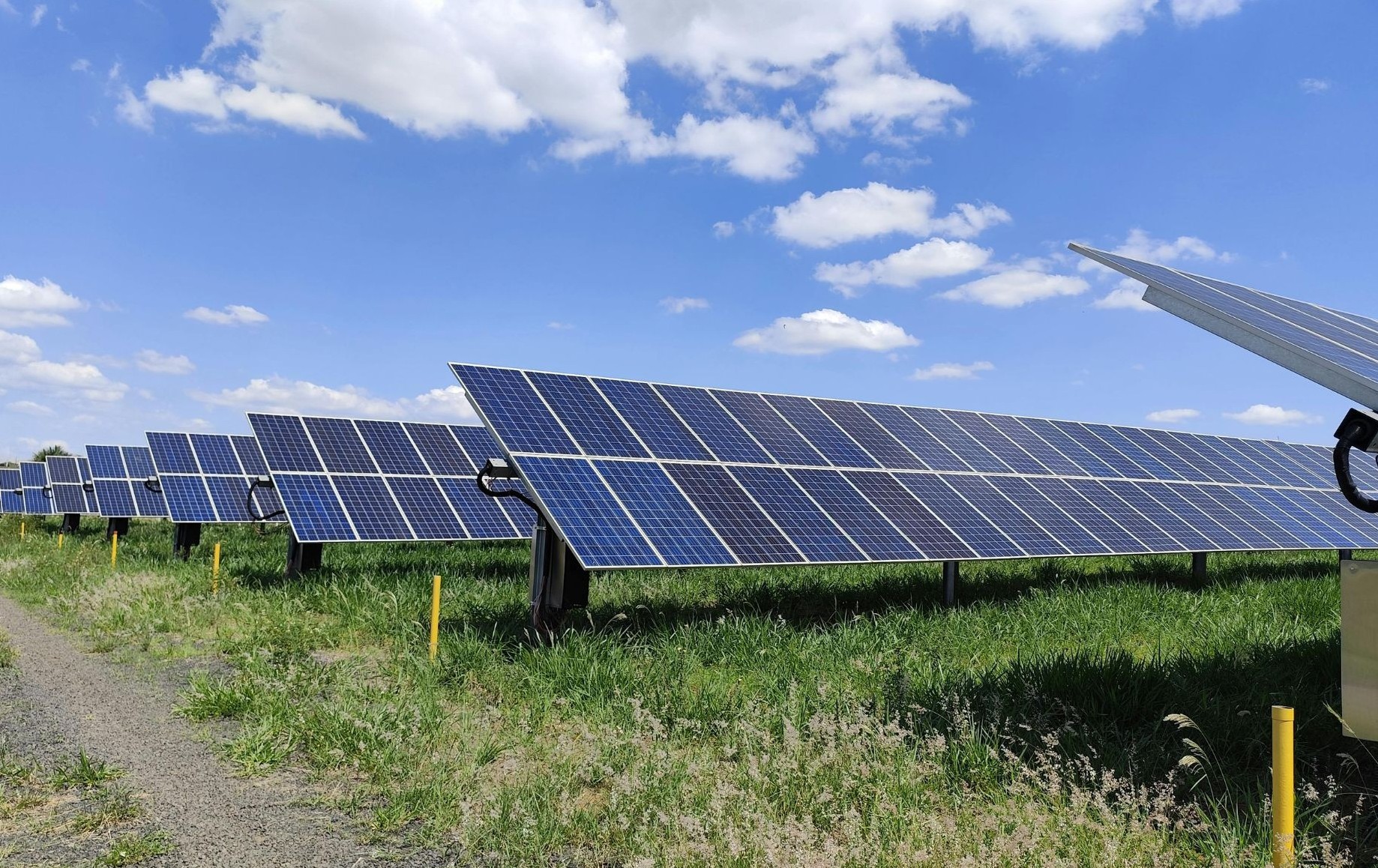
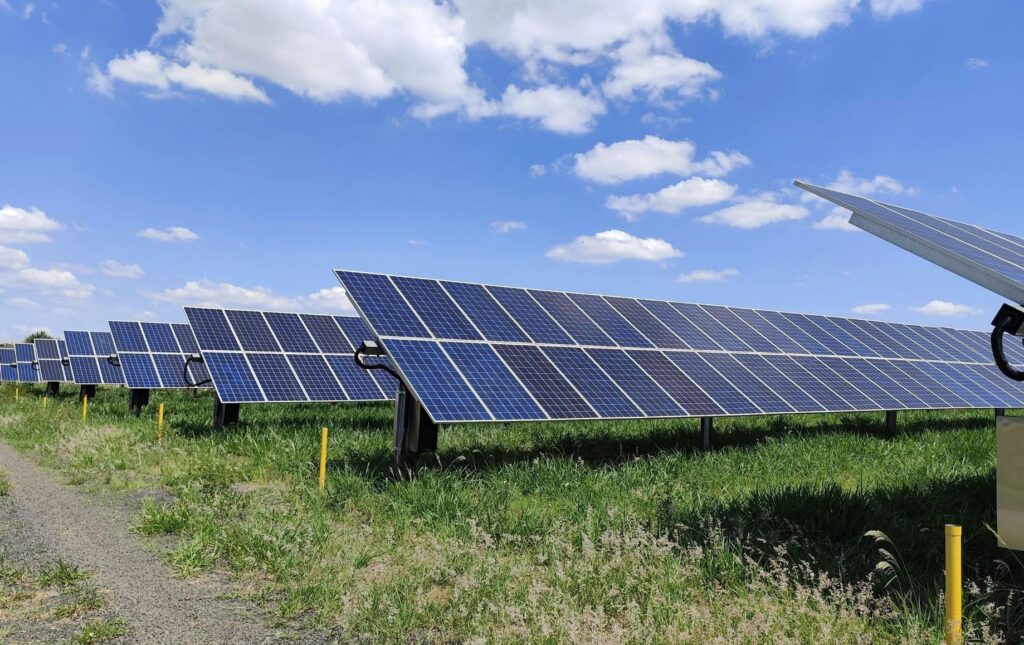
The Finney County Commission on Monday approved a Special Use Permit for Lone Bison Solar, LLC, to operate a 330-megawatt commercial solar energy conversion system to include solar modules, a tracker system, inverters, collection lines, access roads and a project substation.
But before construction can begin and before a building permit is issued, Lone Bison is required to submit official site and building plans following local zoning and subdivision regulations; go through a plan review process; enter various agreements with the County including a development agreement, decommissioning agreement, road use and maintenance agreement and community benefit agreement.
“I want to highlight that the decision made by the commission today does not allow us to move forward into construction,” Ian Edwards, Senior Manager for Project Development with TED Renewables, said. “What it does is provide us with clarity to continue developing our project, subject to a substantial number of conditions that are outlined in this resolution. We need to adhere to a number of conditions prior to construction before we even think about moving any kind of dirt for this project.”
Lone Bison hopes to begin construction in late 2027 on 3,853 acres of ground currently used for agriculture located roughly 11 miles south of Holcomb. Lone Bison expects construction to take 12 to 18 months to complete. The proposed project includes a primary solar array and a potential secondary/alternate array. The project will connect to an existing 345-kilovolt transmission line that connects to a substation south of Holcomb and one east of Hugoton. Lone Bison anticipates the project will produce enough energy to power 75,000 homes per year.
Edwards is a Kansas native who grew up near Bison. He urged the public to read and review the Lone Bison application information and to contact Lone Bison to ask any questions about the project.
“We are not proposing a battery storage component of this project. We are not affiliated with any data center as part of this project,” he said. “For the benefit of the public in terms of transparency, those two things are not on the table as it relates to this project specifically.”
Edwards said in addition to providing energy, the $400 million investment in Finney County will provide jobs and substantial tax revenue to be invested into roads, communities and schools.
Over the life of the project (35+ years), Lone Bison anticipates generating more than $84 million in tax revenue, including more than $6 million within the first five years. The majority of this revenue will directly benefit Finney County, Garden City Community College (GCCC), and the Garden City and Holcomb school districts. By comparison, if the land were to remain in its current use, it is projected to generate approximately $14,000 in tax revenue over the first five years and $114,000 over the intended lifespan of the project. Lone Bison also welcomes partnerships with local schools and work programs to create new opportunities for local job growth.
Lone Bison Solar is being developed by Tyr Energy Development (TED) Renewables, LLC, a Kansas-based renewable development company located in Overland Park. TED Renewables is a 100%-owned subsidiary of Tyr Energy, Inc. (also based in Overland Park, Kansas.) TED Renewable’s ultimate parent company is Itochu Corporation, a Japanese industrial trading house with $104 billion in annual revenue and a market capitalization of approximately $66 billion. The TED Renewables team has extensive experience in development and building over 3,000 megawatts of renewable energy facilities across the U.S. over the past two decades.
Commissioner Gerry Schultz walked Edwards through a series of questions, more for the public’s benefit than his own, designed to point out that Lone Bison is aware of everything they need to address before a building permit would be issued. Schultz asked if Edwards would agree that Finney County’s SUP process is “one of the most comprehensive and burdensome” for any developer in the state. Edwards agreed.
“I need everyone listening and everyone here to understand that just because we grant a land use permit does not mean we have granted a construction permit to begin the construction of this thing until we first know exactly what you’re going to do,” Schultz said.
Edwards said environmental and geotechnical studies have either been completed or are underway and the company is negotiating interconnection agreements currently. He said various studies have been submitted to the FAA, US Fish and Wildlife Service, Kanas Department of Wildlife and Parks and others. He said the developers will continue to refer to best practices and incorporate them into site design items.
Regarding water use, Edwards said the solar facility will require minimal water use and will use much less than is being used currently as irrigated ag land. Lone Bison intends to take nine irrigation pivots out of regular use which Edwards estimates will mean a reduction in groundwater use of over 1 billion gallons per year. More detailed study of water use will be done as part of the ongoing project plans Lone Bison needs to perform.
In addition, Edwards pointed out that Lone Bison will also be providing a detailed vegetation plan to address concerns about potential erosion and blowing dust and will work with specialists on developing a prairie native grass planting protocol within the sandhills.
To read Lone Bison’s SUP application, visit the Finney County website at https://finneycounty.org/54/Agendas-Minutes and click on the July 6 agenda packet link.
Lone Bison maintains a Facebook page at https://www.facebook.com/profile.php?id=61579824662727