


By SCOTT AUST/Greater Garden City
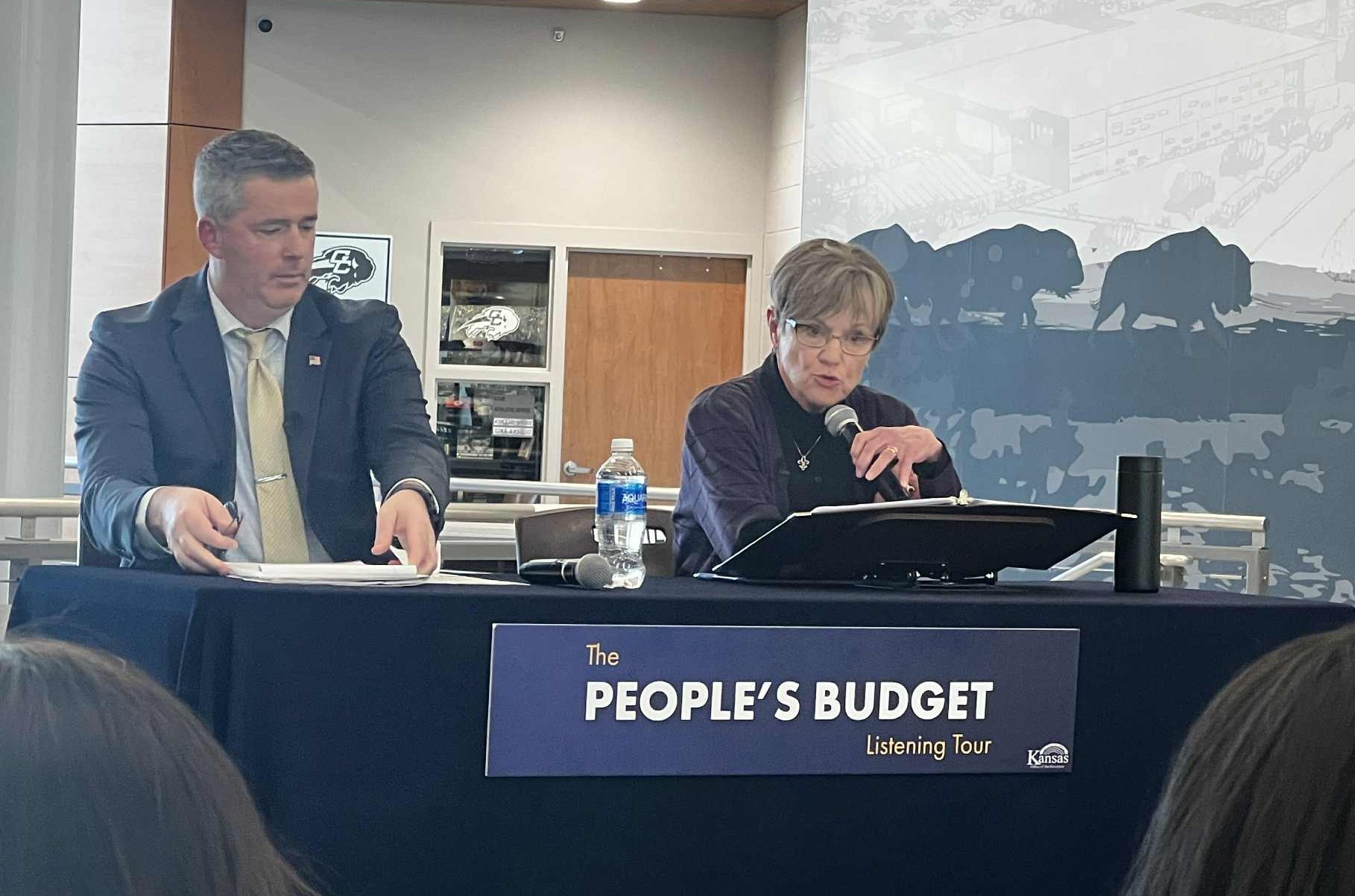
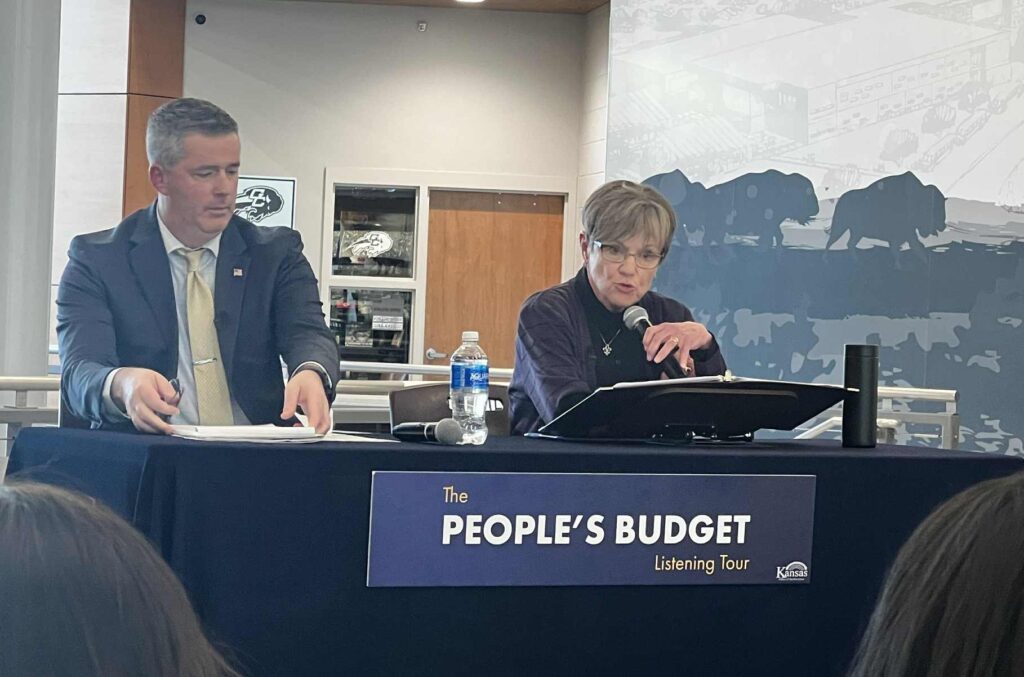
Kansas Governor Laura Kelly’s “People’s Budget” listening tour stopped in Garden City Wednesday night to gather input from locals about budget priorities.
Garden City was the third stop of eight for the listening tour. Kelly’s stated goal is to hear directly from Kansans about their priorities for the state’s budget before the 2026 legislative session begins.
Each January, Gov. Kelly presents a balanced budget proposal to the Kansas Legislature that outlines investments in education, health care, infrastructure, public safety, and other key areas. This past year, the Kansas Legislature disregarded Governor Kelly’s budget proposal, opting to craft its own budget.
According to a press release, the budget passed in April by the Legislature leaves the state facing severe budget shortfalls in the years ahead. The budget created by the state Legislature is projected to have Kansas spend $300 to $700 million more than it receives each year for the foreseeable future, jeopardizing the long-term fiscal health of the state.
Kelly told the group of about 50 people gathered at Garden City High school that she has been “budget obsessed” throughout her career and believes it is the most important responsibility she has as Governor. Done correctly, she said, the state budget, aside from being balanced, should “clearly reflect the needs and wants of Kansans.”
Kelly and Adam Proffitt, Kansas Secretary of Administration and Budget Director, talked about the state’s current budget realities and will use questions and comments from the listening tour to prepare her final state budget as governor.
Sec. Proffitt talked about how the Kelly Administration has turned around the state budget since the Brownback Administration which have involved undoing “budget maneuvers and accounting gimmicks” that took money appropriated from other departments or funds and used them to prop up or make the general fund’s health look better than it actually was.
“Now our bills are paid on time, we’re not borrowing money from ourselves to make it through a fiscal year, our debt has been paid down to the tune of $2 billion early. The result is when you look at our budget, when you look at our profile, you’re getting an accurate reflection of what the state’s finances are instead of it being propped up like a house of cards,” he said. “And what that allows us to do is make investments in the future of Kansas and really drive the state forward.”
Some of the issues raised during a roughly 40-minute Q&A session included questions about fully funding special education; the impact of the federal government shutdown on military pay and the fate of SNAP and other programs; Medicaid expansion as it relates to rural hospitals and quality of health care including mental health; adults with intellectual disabilities; career and technical education; and water.
Mike Waters, Cimmaron-Ensign USD 102 superintendent, thanked Kelly and legislators for efforts to increase special education funding and asked how to get special ed fully funded at the state and federal level.
Kelly signed a bill increasing special education funding by $75 million and supports similar increases every year for several years to comply with a law that requires the state to cover 92% of extra costs for special education services.
Kelly said she will continue to work on it and encouraged people to continue to bring up the issue with legislators about its importance.
“The federal government is complicit in this underfunding,” Kelly added, noting the feds are supposed to provide 40% but currently only provide 11% to 15%.
“I’ve been putting as much pressure as I can on a daily basis on our Congressional delegation to pony up, and to pay their fair share,” she said.
Federal Shutdown
One attendee asked about the federal shutdown’s effect on military pay, while others had questions about the shutdown’s impact on food stamps and other programs and asked if Kelly can have conversations about those topics with federal officials.
“I wish I had a seat at the table but unfortunately there isn’t a table,” Kelly said, referring to the apparent lack of negotiation going on right now on the federal government shutdown. “We don’t have people in Washington talking to each other and they’re not talking to us either. We have got to keep urging, encouraging, pleading with Congress to get back to the table, negotiate and get this shutdown finished.”
Kelly added that states can’t “backfill” dollars for programs like SNAP that are entirely federally funded, reiterating the need to end the shutdown.
“We have to put the pressure on Congress to get back to Washington and get this settled because real people are hurting because of this and it’s only going to get worse if this continues for any length of time,” Kelly said.
Health care/Medicaid expansion
Troy Nanninga, local businessman and a licensed therapist, asked what the governor can do to increase the quality of health care, something Nanninga said he has seen steadily drop over the past decade, and to improve mental health care noting an increasing trend in suicidal ideation and suicides, and the closure of the local short term inpatient crisis center.
Kelly said the best thing that could be done to help would be to expand Medicaid. Not doing so in the past has left $8 billion of local taxpayer money in Washington instead of being returned to Kansas to help not only individual Kansans but also rural hospitals.
Water
In response to a question about her vision for the state’s water, Kelly called it obviously a huge issue for the state, one that was brought up frequently while she was campaigning for office. She said water has been and is one of her top priorities, which led to putting a structure in place to address water issues.
Kelly signed a bi-partisan bill in April to create a water task force. The 16-member task force is charged with developing a long-term sustainable water management strategy for Kansas, and is tasked with evaluating water quality and quantity, current water funding, and proposing a long-term funding source for a state water program. The preliminary report is due Jan. 31, 2026, and the final report is due Jan. 31, 2027.
“Water, in many ways, is an infrastructure issue. It takes lots of planning and thought. But you have to know that the money is going to be there to get things done that need to be done,” Kelly said.
Rep. Jim Minnix, chair of the water task force, asked Kelly if she’d be willing to sign a bill dedicating a percentage of the economic development incentive fund for water that could be a long term dedicated source of funding.
“Well, I never show my cards,” Kelly quipped. “I won’t say yes to that, but I think that your task force needs to examine every possible avenue for that dedicated funding source. I don’t think we start with anything off the table.”
Kelly thanked those who attended Wednesday’s event and assured them their comments will be added to those of the people at the other stops of the tour to be considered while putting together her budget.
Kelly has visited Salina, Hays and Garden City. Remaining stops on the “People’s Budget” listening tour include:
- 6:00 p.m., Monday, November 3: Kansas City, Kansas
- 6:00 p.m., Wednesday, November 5: Leawood
- 6:00 p.m., Thursday, November 6: Emporia
- 6:00 p.m., Monday, November 10: Pittsburg
- 6:00 p.m., Wednesday, November 12: Wichita
For more information, visit Gov. Kelly’s page on the state website at: https://www.governor.ks.gov/newsroom/press-releases